
A Family’s Guide · S/Y Whatever It Takes
Expedition Handbook
Everything families need before their student sails: who is aboard and how to reach us, the ship rules, what to pack, life aboard, medical care and the required documents.
- Term 3
- January 11 – March 5, 2027
- Apply by November 30, 2026
- 5 spots
- Term 4
- March 22 – May 14, 2027
- Apply by January 11, 2027
- 5 spots
- Length
- 7 Weeks
- Vessel
- S/Y Whatever It Takes
Term 3 & 4 Expeditions · 2026–27
Watch the Expedition Overview
Watch it with your student before you start: it explains what a sailing expedition is and what students do aboard, so you both know what you are applying for.
About the Expedition
Each expedition is a 7-week sailing voyage that sets out at the start of its term: Term 3 in January, Term 4 in March. Students sail with their teachers aboard S/Y Whatever It Takes, our 100-foot vessel, sharing the work of running the boat and looking out for one another. The expedition is a graduation requirement at your student’s school, because it builds what a classroom can’t: confidence, a stronger work ethic and friendships that last.
01 · Why We Sail
Seven Weeks That Change What a Student Believes They Can Do
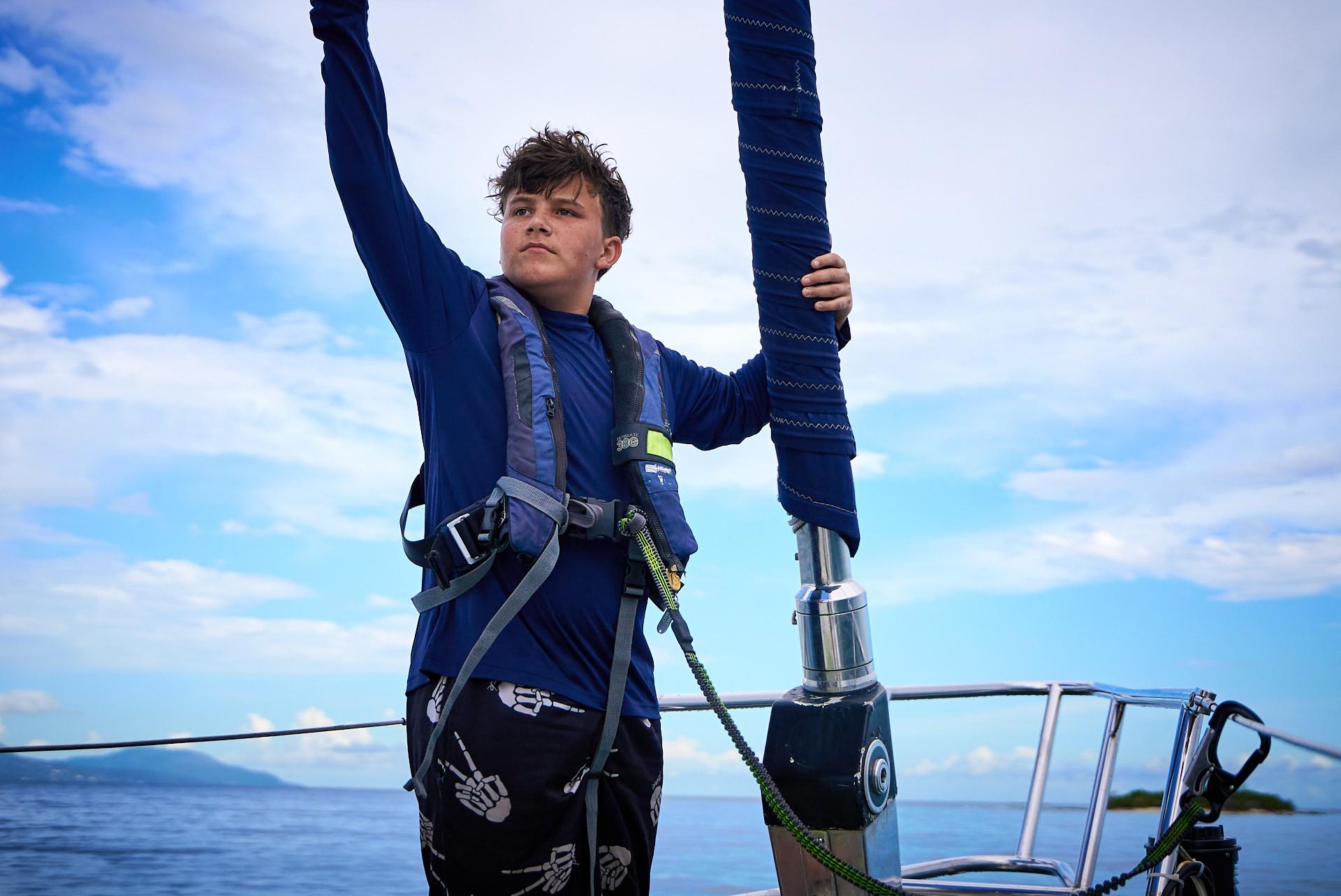
On an expedition there is no back row. Every student stands watch, holds a job in one of the ship’s four departments, and helps bring a 100-foot vessel safely into port. They leave as students and come home as crew.
Squalls, night passages and long days at sea ask more of a student than any classroom, and meeting them builds resilience that lasts. A crew that works, eats and solves problems together makes friends for life, and learns what it means to be counted on. Each student learns a real job, in the engine room, on deck, in the galley or keeping the ship in order, alongside seamanship and navigation. And away from the familiar, many come home with a new sense of who they are and where they are headed.
The expedition is a graduation requirement at your student’s school. The sea is an honest teacher: the weather doesn’t negotiate, and the results of hard work are right in front of you.
What Students Bring Home
- Resilience
- Lifelong Friendships
- Teamwork
- Real-World Skills
- A Sense of Direction
“Expeditions serve as a rite of passage that catalyzes personal transformation, seen through changes in behavior, world view and self-concept.”
- Weeks at Sea
- 7
- Sailing Ketch
- 100 ft
- Working Crew
- 24/7
02 · Who’s Aboard
The Expedition Team
- Expedition Team
Captain Kenrick
01 / 03Captain
Commands the vessel at sea: navigation, safety and every decision underway. The Captain has the final word aboard.
- Expedition Team
Mr. William Clymer
02 / 03First Mate
The Captain’s second in command. Runs the deck and trains students in seamanship, watches and their daily jobs.
- Expedition Team
Ms. Brianna Joy
03 / 03Program Manager
Runs the program day to day aboard: the schedule, schoolwork and student life, and keeps the school informed.
5
Adults
3
Full-Time Expedition Staff
2
Support Teachers
10
Students
Visiting Teachers & Support Staff
Teachers and support staff from your student’s school join the expedition in rotation, usually for three weeks at a time. Teachers keep students on track with their coursework at sea, from math and reading to maritime skills and business. Support staff mentor students through daily life aboard and help with travel and logistics. Every adult aboard is part of the crew, and every one of them is there for the students.
03 · Where We’ve Sailed
A globe dotted with passages students have sailed, 106 ports in 30 countries and territories among them.
04 · Safety
Safety Comes First
The Vessel
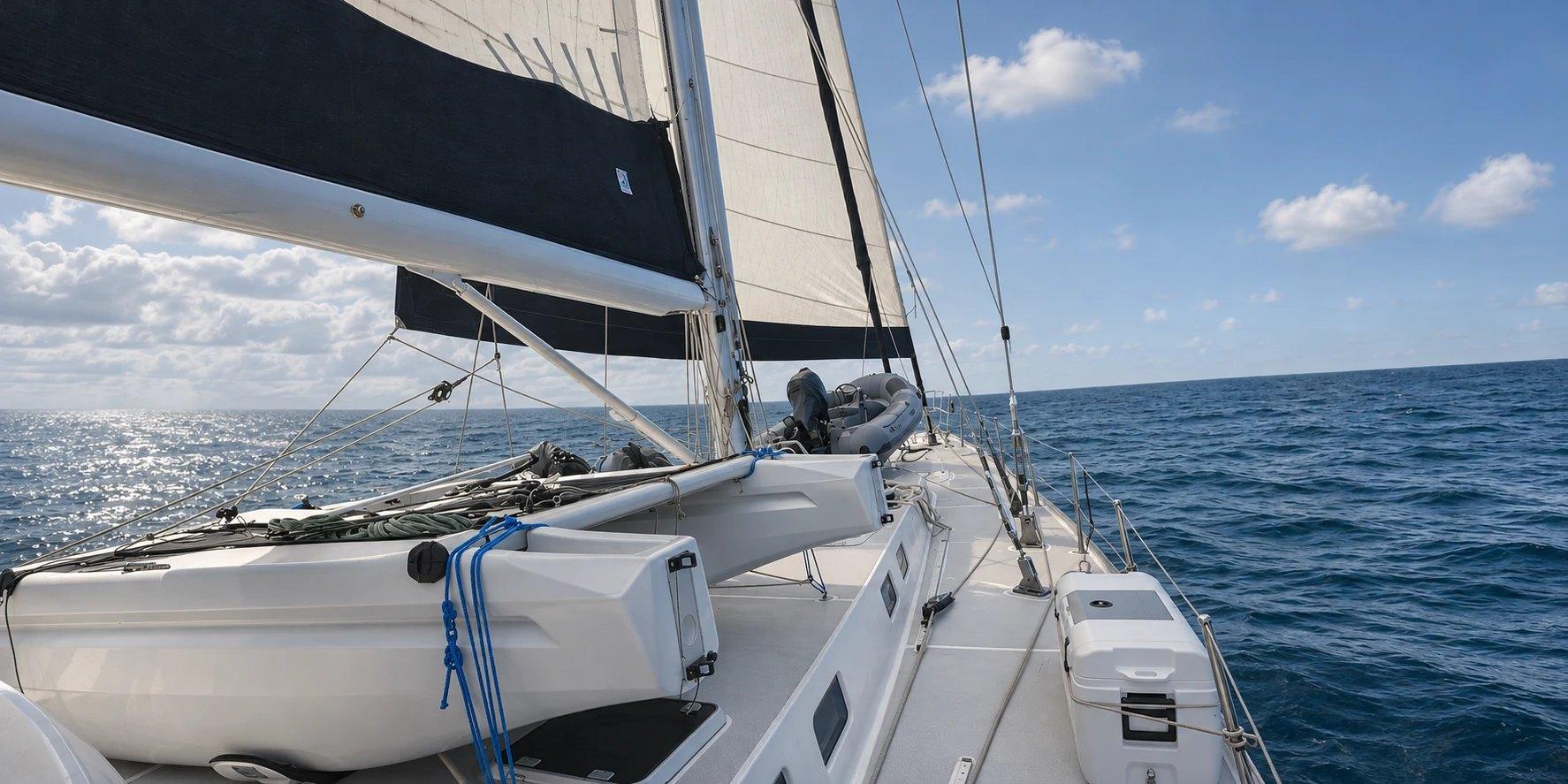
S/Y Whatever It Takes is a 100-foot sailing ketch built to sail anywhere: built by North Wind Marine in Rhode Island to a design by Paez Marine of Buenos Aires. She meets the international and oceanic commercial safety requirements to operate around the world, and sails with 12 students and 6 adults aboard. The Captain has the final word on every decision at sea, from when to sail to when to wait out the weather, and the route can change at any time for safety.
Equipment Aboard
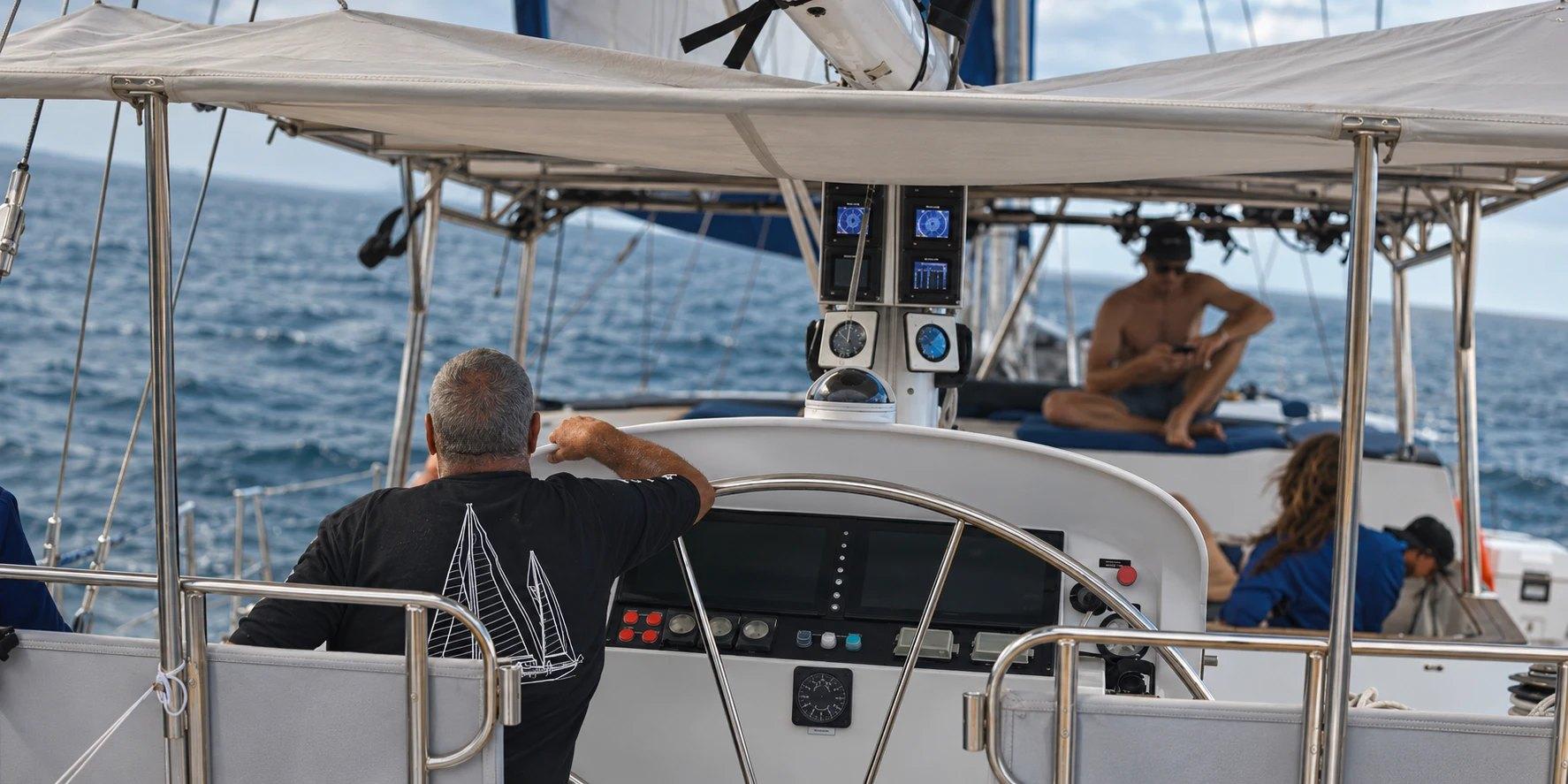
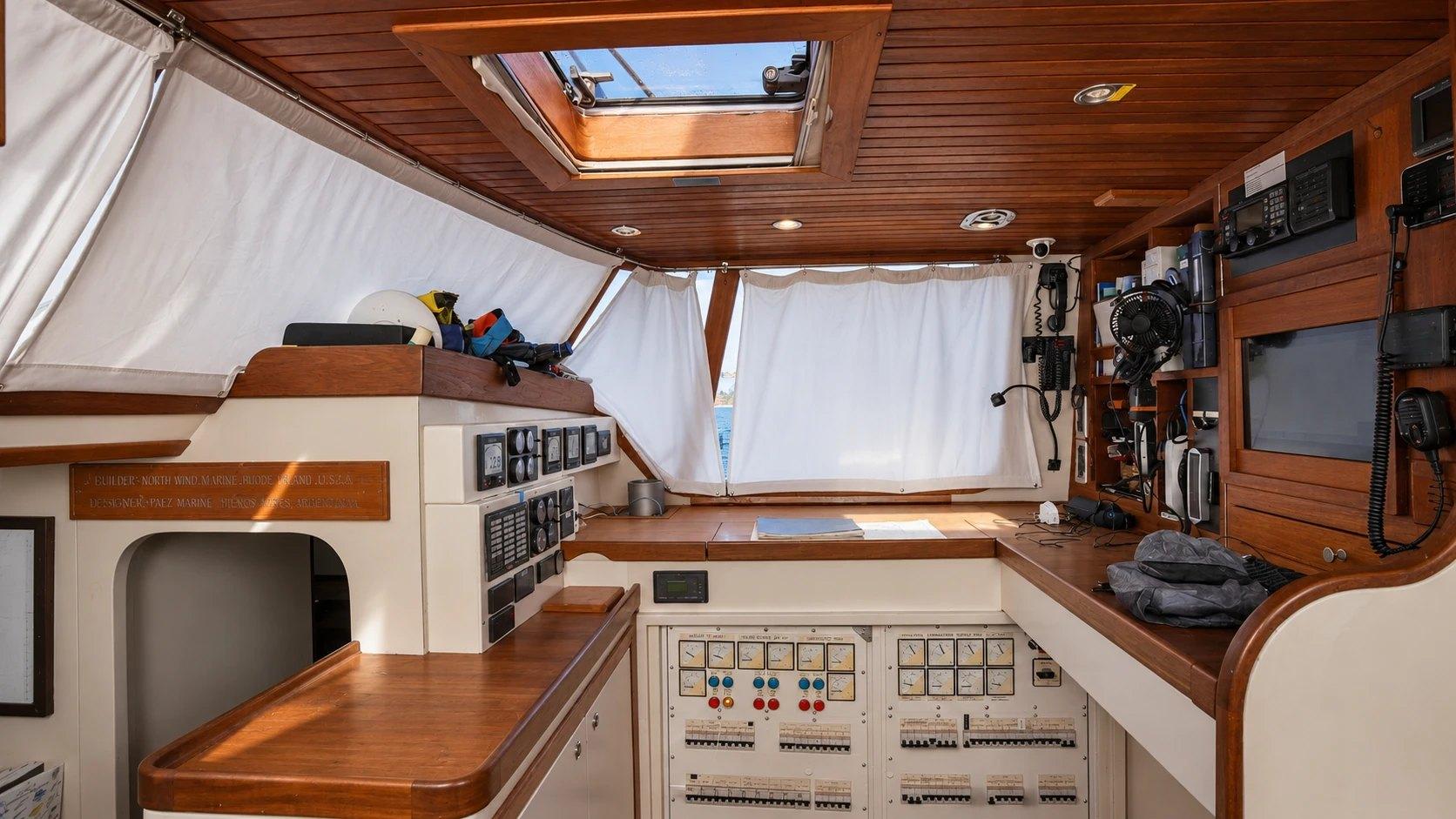
The vessel carries life-saving equipment, comprehensive medical supplies, multiple safety redundancies and two RIB tenders. Every student wears a life jacket and safety equipment whenever it is required, and before the vessel leaves the dock, every student learns where the safety equipment is kept, how to use it and what to do in each emergency drill. Every cabin has its own safety card, the deckhouse posts the ship’s life-saving and safety instructions, and the navigation station carries the ship’s radios.
A Trained Crew and a Steady Routine
Every crew member completes First Aid, CPR and STCW (Standards of Training, Certification and Watchkeeping) training before departure. Underway, the watch writes the ship’s log every hour, checks the engine room and plots the vessel’s position on a paper chart, so the crew always knows where the ship is and how she is running. There are established procedures for every kind of emergency.
If Something Goes Wrong
An on-call doctor is available for telehealth visits and advice on minor medical issues. In the rare case of a vessel, medical or other emergency, parents and guardians are contacted immediately, using the contacts in the student’s registration records, so keep them up to date.
Safety Equipment Aboard
- Life jackets for every student, worn whenever required
- Safety harnesses and tethers for work on deck
- Life rings on deck
- Two RIB tenders
- Radios in the chart house, and handheld radios
- Comprehensive medical supplies
- A safety card in every cabin, and life-saving instructions posted aboard
05 · Life Aboard
S/Y Whatever It Takes
Tour the Boat
 On Deck
 On Deck
The Helm
 Below Deck
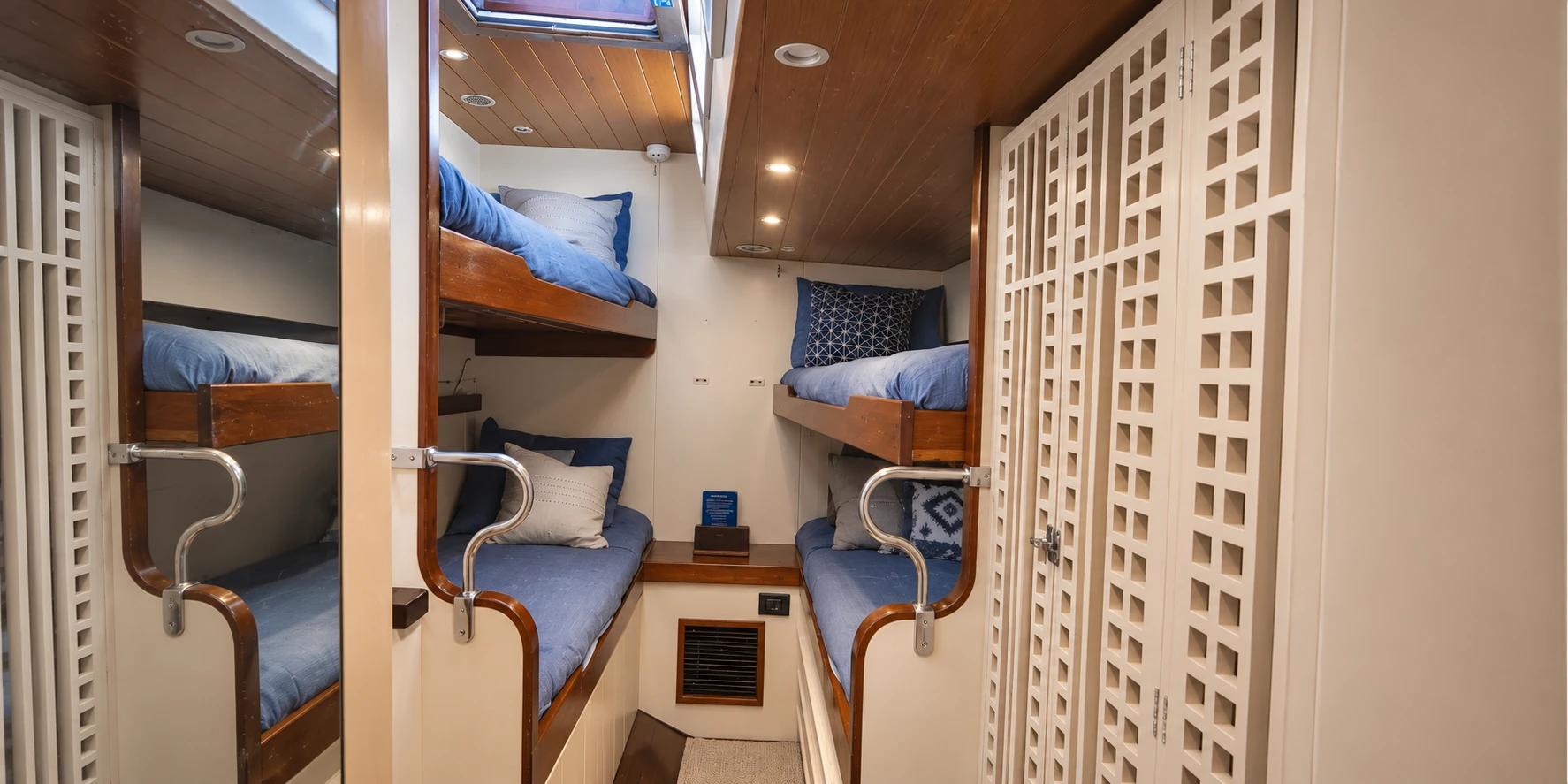
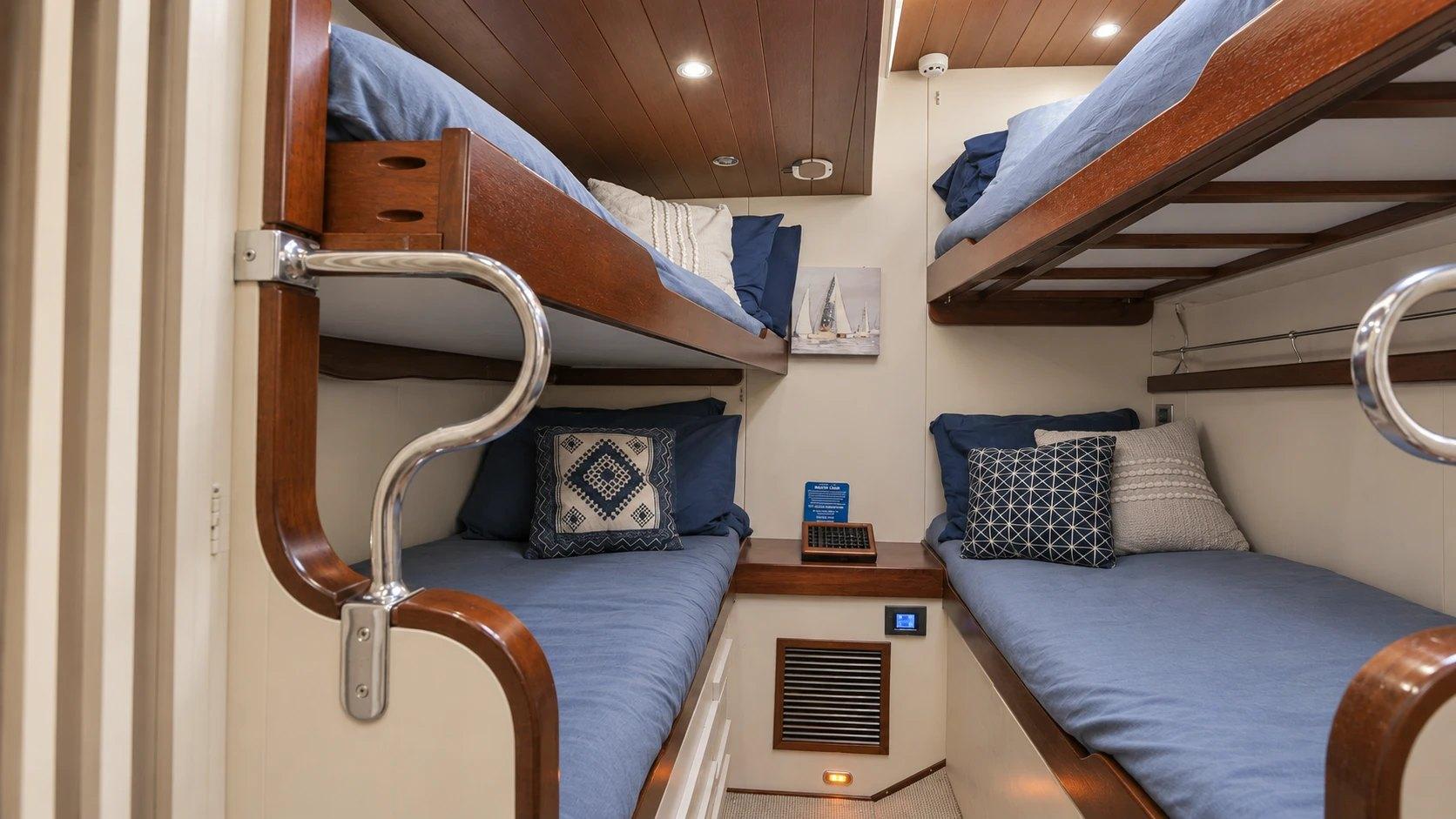
Starboard Side Cabin
 Below Deck
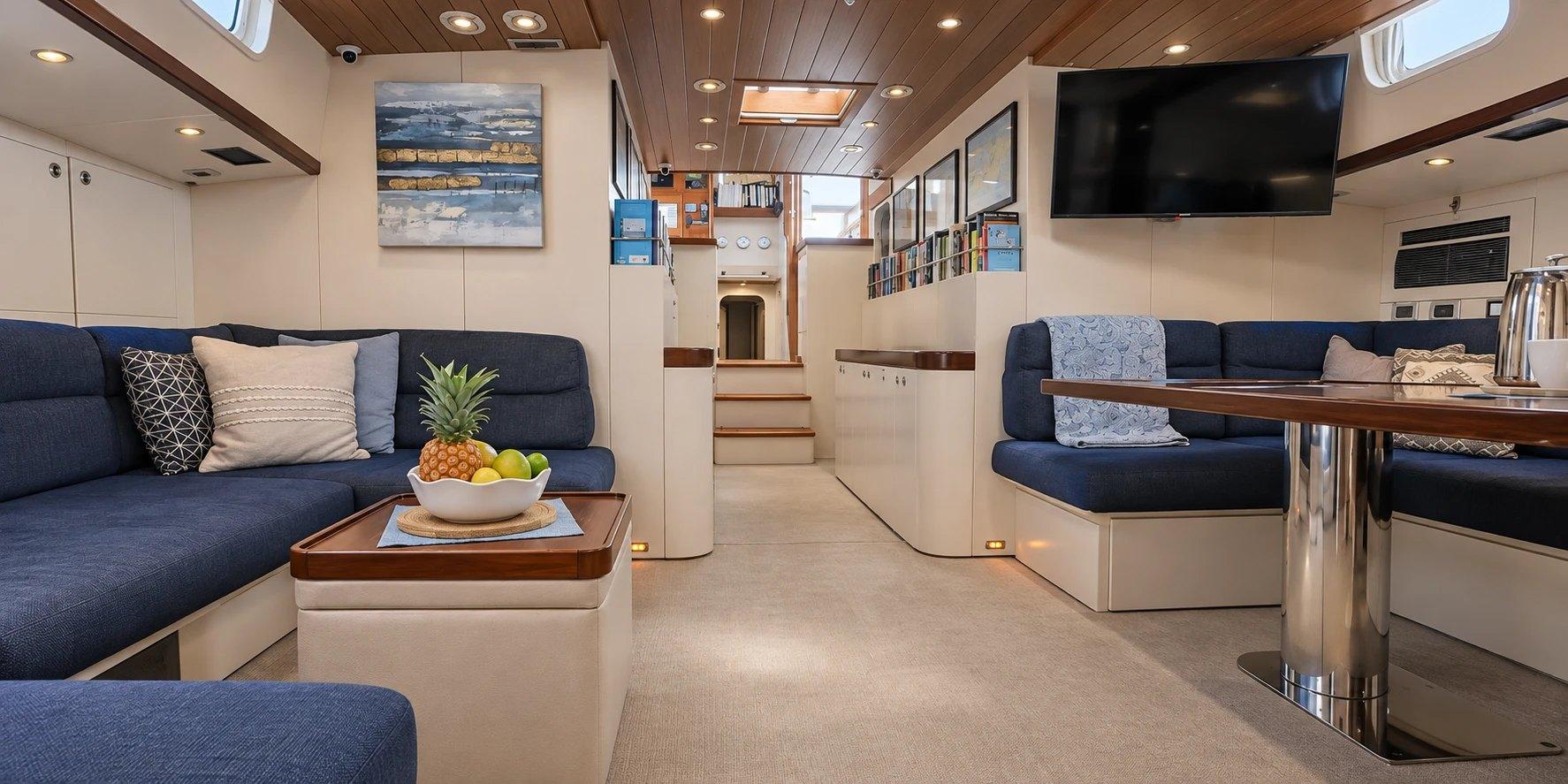
The Salon
 On Deck
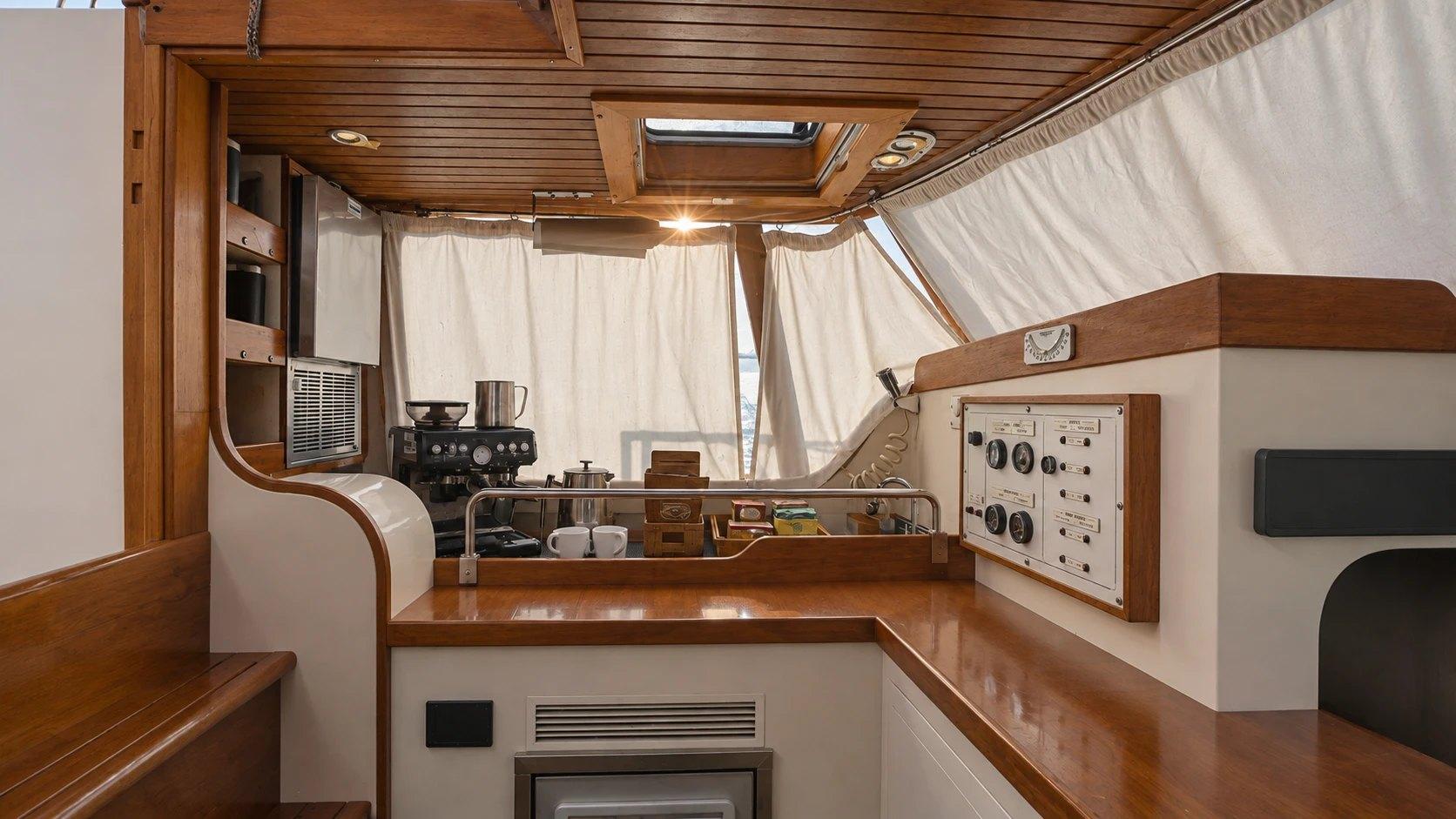
The Wet Bar
 On Deck
The Chart House
 Below Deck
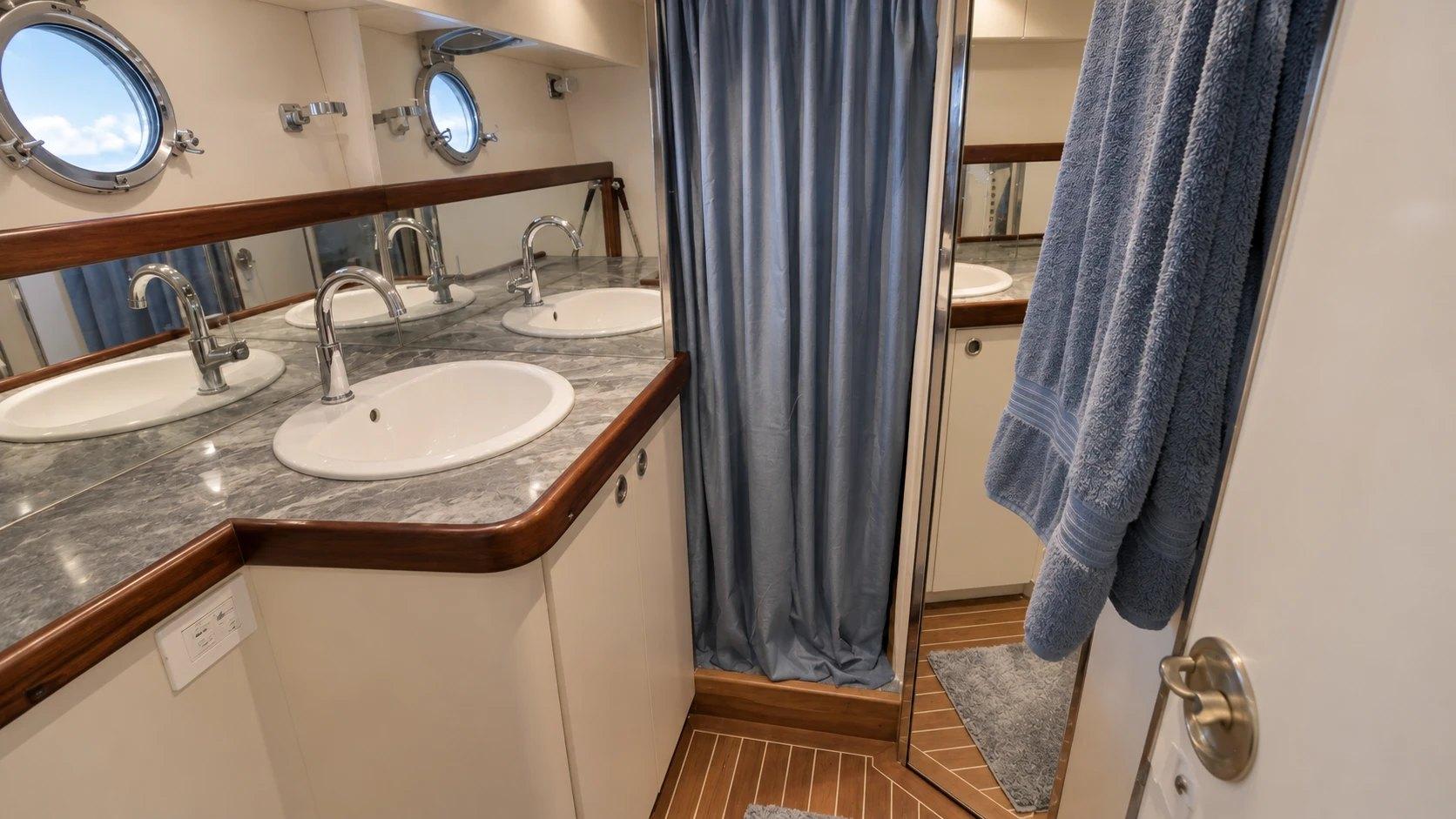
Bathrooms
 Below Deck
Port Side Cabin
House Rules
Living Aboard
From the Week 1 orientation
| Area | The Rule |
|---|---|
| The Vessel | Students are crew, not guests or passengers, entrusted with a $2 million vessel. It is our responsibility to treat it and maintain it that way. |
| Cabins | Beds made every morning, nothing on the floor, closets organized, the head’s wastebasket emptied daily, no food. Random cabin checks happen daily. |
| Laundry | The Interior department runs the laundry for the whole crew, once a week per student, on a schedule set by the Interior department, clothes and bed linens included. Students hang their own laundry to dry, then fold and store it. Washers and dryers run only with the generator, about two hours each morning and evening. |
| Meals | Meals follow a set meal plan, and everyone eats together. No personal food, snacks or drinks come aboard; snacks are available on request. No food in cabins or the salon, except dinner in the salon when it rains. |
| Dish Day | Every crew member except the chefs does the dishes one day a week, by department, finished by 11:00 PM. |
| Galley | A commercial galley where the Head Chef and the Galley crew cook three meals a day, up to 60 in all, and teach the basics of culinary arts. No preparing your own food, nothing from the pantry or fridges and no stove without the Head Chef’s permission. Meals follow the meal plan and are portioned by the chefs. |
| Heads | Nothing goes down a toilet but human waste, not even toilet paper. If paper goes in by mistake, ask for help removing it: don’t flush. If a toilet clogs or breaks, the cabin’s students share the repair and the cost of parts. If it won’t flush, call the Captain. |
| Losing Shore Privileges | Missing a watch or breaking galley rules costs a student their next time ashore. |
06 · The Caribbean Expedition
07 · Ship Rules
The Rules Aboard
Safety and Authority
- Always listen to and follow the Captain’s directions, repeating back orders to confirm understanding.
- No sail maneuvers without the Captain’s approval.
- Always wear appropriate safety equipment or a life jacket when required.
- No running or jumping on deck.
- No swimming without explicit staff approval (no flips, head-first dives or horseplay in the water).
- Always remain within line-of-sight supervision of an adult.
- Always tell an adult where you are going before moving elsewhere (bathroom, vehicle, etc.).
- No unauthorized use of navigation or communication equipment.
8 Rules
01 / 04Prohibited Items and Activities
- Absolutely no possession or use of drugs, alcohol, nicotine or tobacco.
- No knives, sharp objects, weapons or potentially harmful objects.
- No food in cabins or salon areas, unless dinner is served in the salon because of rain.
- No personal food or snacks aboard at any time.
- No personal meal preparation: eat only the assigned meals on the meal plan. Snacks are available on request.
5 Rules
02 / 04Respect and Behavior
- Treat all crew members, peers and the vessel with respect.
- No physical violence, theft or property destruction under any circumstances.
- No bullying, harassment or discrimination of any kind.
- Respect others’ personal boundaries and privacy.
- Behave respectfully and appropriately in public.
- Do not throw anything overboard. Respect marine life and the environment.
- No graffiti or marking any part of the vessel.
7 Rules
03 / 04Responsibilities
- Take an active part in all assigned duties and activities: job responsibilities, coursework, briefings, service projects and on-shore excursions.
- Always return tools and equipment to their place.
- Keep up personal hygiene and cleanliness.
- Keep your living space clean and organized, and make your bed every morning.
- Keep to curfew and quiet hours, and be in your assigned sleeping area at the set times.
- Be up and ready 10 minutes before your shift.
- On watch, stay in the helm cockpit (not the seating cockpit) and never lie down.
- Finish work responsibilities and schoolwork before taking part in on-shore excursions.
8 Rules
04 / 04No Phones Aboard
No cell phones are allowed on the expedition, in students’ best interest: so they can be fully present, step away from old patterns of behavior, drama and the internet, and reach a deeper sense of themselves and awareness of others.
Leave phones, smartwatches and tablets at home: bags are searched before departure. For anything urgent, families call the school, and the school reaches the vessel.
08 · Discipline Policy
Discipline Policy
Strike 1
A Report Home
Incident documented and a report sent to the parent or guardian.
Strike 2
A Formal Hearing
Incident documented and a formal disciplinary hearing with the administrative team.
Strike 3
Sent Home
Incident documented and immediate removal from the expedition.
How a Strike Is Earned
Any adult can issue a referral. Three documented infractions add up to one.
- Infraction 1
- Infraction 2
- Infraction 3
- 1 Referral
Infractions
When a student breaks a ship rule, the staff member who saw it documents the student’s name, the date, what happened and any immediate consequence. Infractions add up to a referral.Documented by Staff
Referrals
Any adult aboard may issue a referral at any time for not meeting the ship rules and expedition expectations. Each referral brings an immediate consequence.Any Adult Aboard
Zero Tolerance
Safety aboard is our first responsibility, and everyone shares the duty of keeping each other safe. The rules are there to give every student a safe, productive and enjoyable expedition. Sailing internationally on our school vessel is a privilege that depends on continuous trust and communication. There is zero tolerance for chronically unsafe behavior, gross insubordination or repeated violations of ship rules and expedition expectations. Depending on how serious a violation is, a student may be sent home from the expedition immediately, and disruption during an expedition can lead to expulsion from school.Removal or Expulsion
Consequences
Any adult may give a consequence for not meeting the rules, including:
- Removal from on-shore activities and excursions, staying with the vessel
- A lower professionalism score or fewer earned incentive points
- Additional responsibilities
- Communication with parents or guardians
- A documented infraction or referral
Given by Any Adult
Early Departure Transportation
Students’ travel to and from the vessel is budgeted and bought at the start of the expedition. Any other travel, including dismissal for disciplinary reasons, a medical emergency or a family emergency, must be arranged and paid for by the student’s guardian.Paid by the Guardian
09 · Jobs Aboard
Job Responsibilities & Key Departments
The Four Departments
 Department
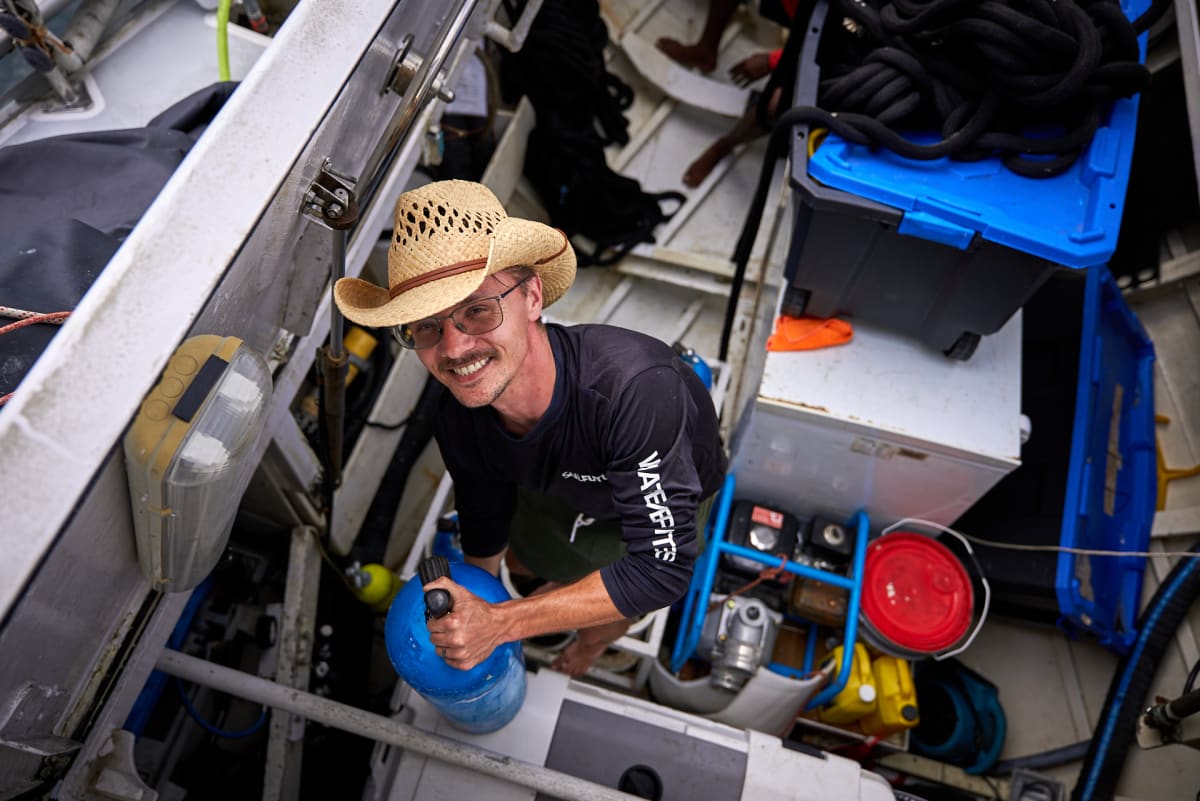
Engineering
Ship systems: propulsion, generators, watermakers, chillers and pumps, with daily maintenance and repairs.
Engines · Generators · Watermakers
01 / 04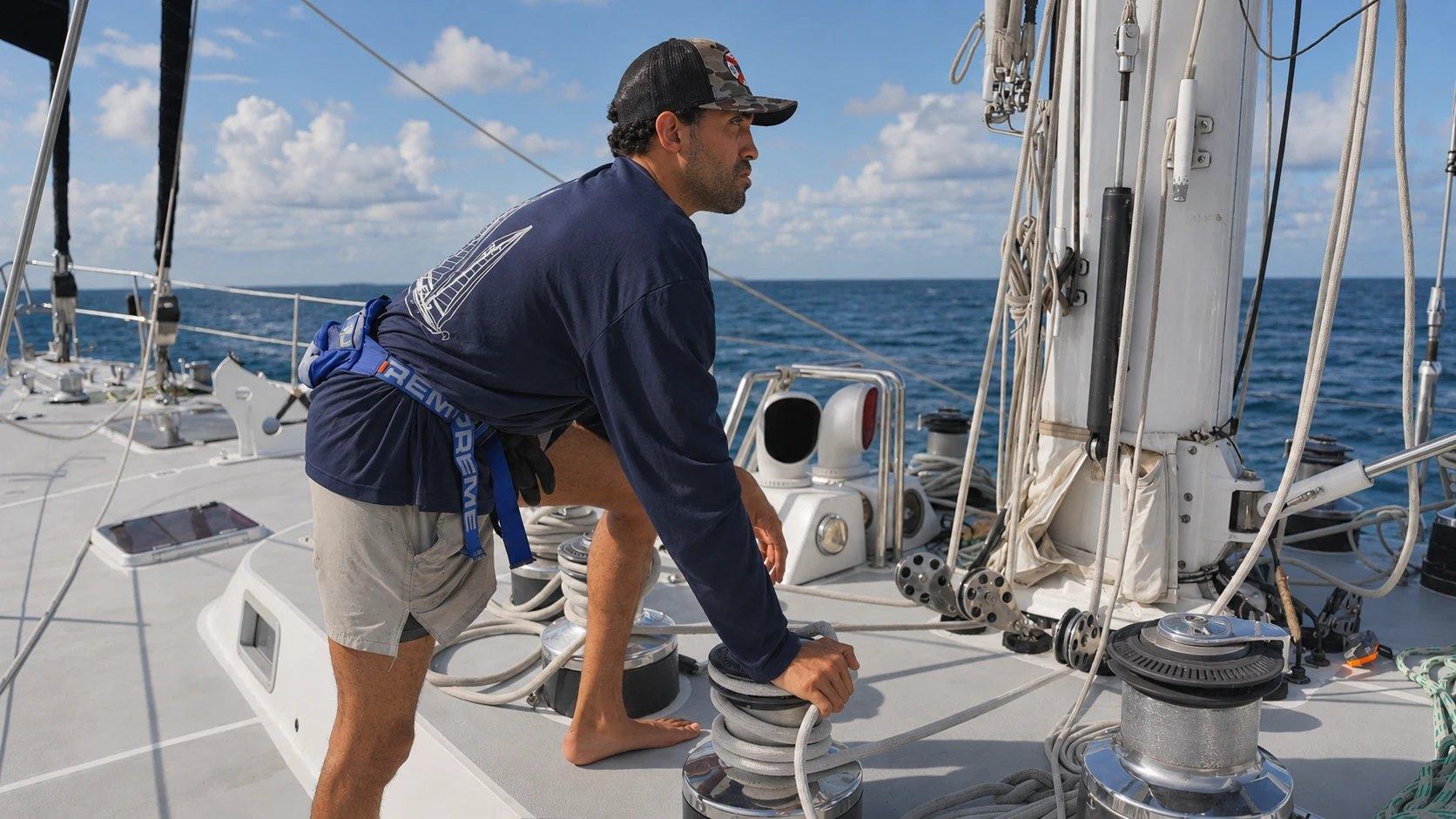 Department
Deck
Cleanliness and organization above deck: wash-downs, rigging and tender maintenance and safety equipment checks.
Rigging · Tenders · Safety Gear
02 / 04 Department
Galley
All culinary operations: provisioning, food management, galley cleanliness and three meals a day for the whole crew.
Provisioning · Three Meals a Day
03 / 04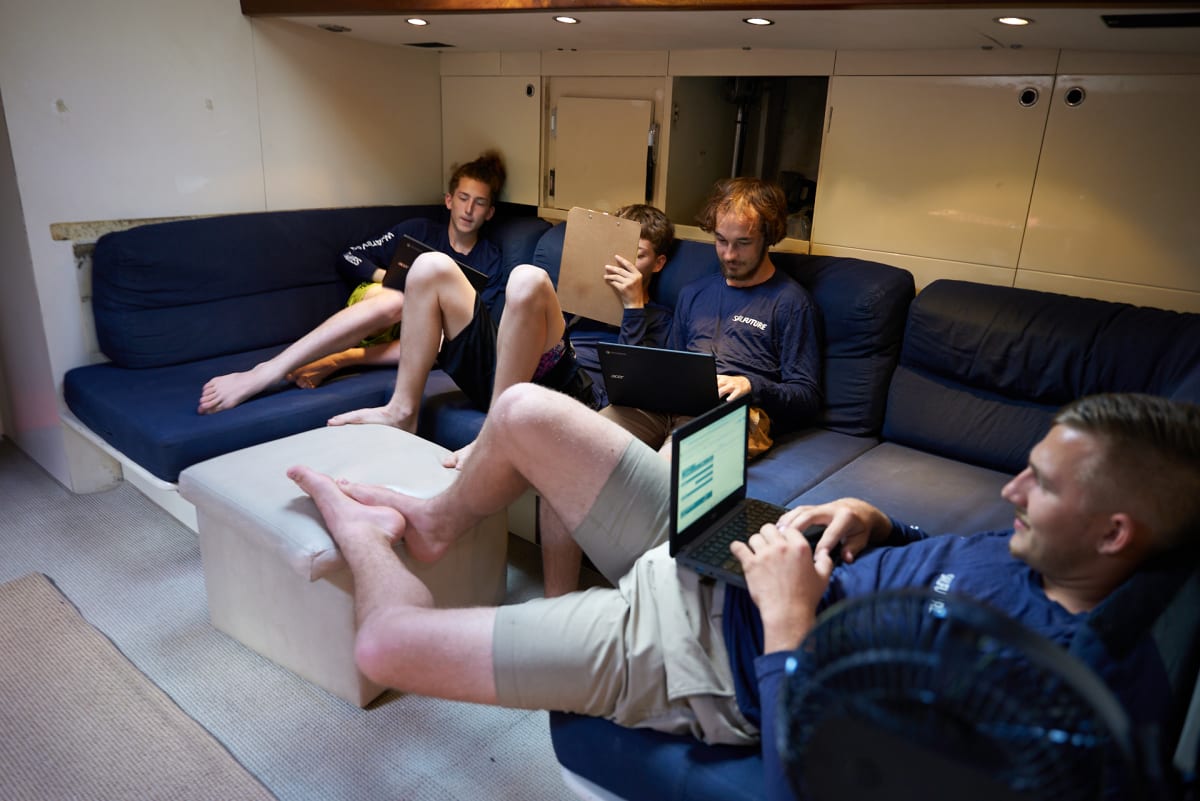 Department
Interior
Cabins, bathrooms and common spaces, and the onboard laundry service for the whole crew.
Cabins · Common Spaces · Laundry
04 / 04
10 · Evaluations
Daily Evaluations
What Gets Scored
Six categories
| Category | What It Covers | When |
|---|---|---|
| School | What It CoversCoursework, attendance and participation: arriving at class ready, taking part, and finishing each day’s assignments. | WhenSchool Days |
| Job | What It CoversThe student’s department duties, done thoroughly and on time, under the adult supervisor who runs the department. | WhenEvery Day |
| Citizenship | What It CoversRespect, maturity and a positive part in the crew’s community: attitude, teamwork and following the ship rules. | WhenEvery Day |
| Crew | What It CoversWatches, dish duty and cabin: the work every crew member shares, from standing watch on time to a clean cabin. | WhenOffshore Days |
| Service | What It CoversEngagement in service projects and activities ashore that support the communities, cultures and places the voyage visits. | WhenService Days |
| Journal | What It CoversOne page every night on the day’s experiences, challenges and learning, marked completed, incomplete or not started. | WhenEvery Night |
The Daily Score
0 to 5, every day, in every area
| Score | Label | What It Means |
|---|---|---|
| 0 | LabelAbsent | What It MeansNot there, or did not take part. |
| 1 | LabelDid Not Meet Expectation | What It MeansThe work was not done, or staff had to step in. |
| 2 | LabelBelow Expectation | What It MeansDone, but late, in part, or only with reminders. |
| 3 | LabelMet Expectation | What It MeansDid what was expected, on time and done well. |
| 4 | LabelExceeded Expectation | What It MeansWent beyond what was asked. |
| 5 | LabelExceptional | What It MeansA standout day the crew can learn from. |
A 3 means the student met the day’s expectation. Any score above or below 3 is recorded with a reason, such as an extra watch stood or a late start to a shift, so every number can be explained.
Weekly Labels
Each week, a category’s average score earns a label and points, out of 30.
- Critical InterventionAverage 0 to 1.10 points · 0%
- Needs ImprovementAverage 1.1 to 2.2510 points · 33.3%
- DevelopingAverage 2.251 to 2.7520 points · 66.7%
- Met ExpectationsAverage 2.751 to 3.225 points · 83.3%
- Exceeded ExpectationsAverage 3.21 to 5.030 points · 100%
Weekly Reviews and the Final Evaluation
Each week, the daily scores become a performance review. At the end of the voyage, every student receives a final evaluation: a final score for the whole expedition, a breakdown by category from every daily score and journal, and the evaluator’s comments. A student who completes the expedition also receives a completion certificate. Both are sent home to families.
How to Read a Weekly Review
Performance Scores
Each category’s average for the week and the label it earns: green for Met Expectations, blue for Exceeded.
Daily Scores
Every score from the week, day by day. A dash means that category wasn’t scored that day.
Journaling
Whether the nightly journal was completed each night, and the share of nights for the week.
Notes
Written feedback from staff: what went well and what to work on next week.
Why the Final Evaluation Matters
A Graduation Requirement
Completing the International Rite of Passage Sailing Expedition is a graduation requirement at your student’s school. The completion certificate shows it is done.
Every Category Counts
A student must reach Met Expectations or better in every category, and Satisfactory or better in Journaling. Strong scores in one category do not make up for another.
If a Category Falls Short
A student below that mark in any category has not completed the requirement, and their graduation is delayed until they do.
What Each Category Needs
| Category | Average |
|---|---|
| Exceeded Expectations | 3.21 and up |
| Met Expectations | 2.75 to 3.20 |
| Developing or Below | Below 2.75 |
Journaling
| Journaling | Nights |
|---|---|
| Strong Satisfactory | 90% and up |
| Satisfactory | 70% to 89% |
| Unsatisfactory | Below 70% |
Averages are of the whole voyage’s daily scores. Journaling is the share of nights with a journal page.
11 · A Day Aboard
What a Day Looks Like
- From the Expedition Calendar01 / 03
A Typical Day
- Wake Ups6:30 – 7:00 AM30m
- Fitness7:00 – 8:00 AM1h
- Breakfast8:00 – 9:00 AMButtermilk pancakes, fried eggs and chicken sausage. The galley crew preps from 7:30; dishes at 8:30.1h
- Academics9:00 AM – 12:00 PMStarts with journaling.3h
- Lunch12:00 – 1:00 PMSausage, peppers and onions with mac and cheese. Prep from 11:30; dishes at 12:30.1h
- Departure Checklists1:00 – 4:00 PM3h
- Shore Activity4:00 – 7:00 PM3h
- Dinner7:00 – 9:00 PMBaked chicken and pepper penne, prepped from 5:00. Opens with Rose, Bud, Thorn; dishes at 8:30.2h
- Community Time9:00 – 10:00 PMEnds with the nightly recap.1h
- Lights Out10:00 PM – 12:00 AM2h
- Underway02 / 03
A Day on Passage
- Asleep12:00 – 6:00 AMThe night watches are on deck.6h
- On Watch6:00 – 9:00 AMHelm, lookout, the hourly log, an engine check and the position on the chart.3h
- Breakfast9:00 – 9:30 AMAfter the watch hand-off.30m
- Rest9:30 AM – 12:00 PM2h 30m
- Lunch12:00 – 1:00 PM1h
- Department Duties1:00 – 3:00 PM2h
- Off Watch3:00 – 5:30 PMReading, coursework and the journal.2h 30m
- Early Dinner5:30 – 6:00 PM30m
- On Watch6:00 – 9:00 PM3h
- Sleep9:00 PM – 12:00 AMAfter the watch hand-off.3h
- In Port03 / 03
A Service Day
- Wake Ups6:30 – 7:00 AM30m
- Fitness7:00 – 8:00 AM1h
- Breakfast8:00 – 8:45 AM45m
- Ashore by Tender8:45 – 9:00 AM15m
- Service Project9:00 AM – 12:00 PMWith a local partner.3h
- Lunch Ashore12:00 – 1:00 PM1h
- Group Debrief1:00 – 2:00 PMAnd a journal prompt.1h
- Shore Recreation2:00 – 5:30 PMSnorkeling, a city tour or a hike.3h 30m
- Back Aboard5:30 – 7:00 PM1h 30m
- Dinner7:00 – 9:00 PMOpens with Rose, Bud, Thorn.2h
- Community Time9:00 – 10:00 PM1h
- Lights Out10:00 PM – 12:00 AM2h
On Watch
Underway, the crew works 3-hour watches around the clock. On every watch:
- A ship’s log entry every hour
- An engine room check every hour, recorded in the log
- The ship’s position plotted on a paper chart every hour
- The Captain’s sailing directions reviewed at the start of the watch
- A briefing hand-off between watch supervisors at every change
What Fills the Seven Weeks
Mentorship & Support
- Support and mentorship from every adult aboard
- Social-emotional and personal development coursework
01 / 08
Crew Roles
- Daily and arrival / departure checklists
- Weekly training objectives and assessments
- Performance reviews
02 / 08
Volunteerism
- In-port volunteer experiences
- Structured group debriefs
- Journal prompts before and after
03 / 08
Offshore Sailing
- The watch schedule and helming
- Safety procedures and sailing maneuvers
04 / 08
In-Port Recreation
- Snorkeling and diving
- City tours and sponsored activities
- Crew celebrations
05 / 08
Feedback Loops
- Performance reviews
- Immediate feedback: affirmation and discipline
- Behavior agreements and daily check-ins
06 / 08
Travel & Exposure
- Iconic cities and places
- Career visits with in-port partners
- Cultural exchanges in foreign ports
07 / 08
Academic Coursework
- Classes three days a week
- Same-day assignments
- A narrative evaluation and grade per course
08 / 08
12 · Academics Aboard
School Continues at Sea
Courses Aboard
Laptops, with Starlink in port
| Course | What It Is |
|---|---|
| MathAssigned Course | The student’s math course from school, at their own level. Students keep working through it on their laptop, with help from the teachers aboard, and submit their work over Starlink in port. |
| ELAAssigned Course | The student’s English Language Arts course from school: reading and writing. Students keep reading and writing on their laptop, and submit assignments over Starlink in port. |
| Business ThesisAssigned Course | The capstone business plan thesis, for a business of the student’s choice, presented to a panel of investors. Students keep researching and writing their plan aboard, and work online over Starlink on port days. |
| Personal Life MapAssigned Course | The student’s goals after graduation, and a plan for budgeting, saving, insurance, transportation and more. Students keep building their plan aboard, and the expedition’s reflection time feeds straight into their goals. |
| Social StudiesEvery Student | A social studies course added for the expedition, and taken by every student during the voyage. |
| Rite of PassageEvery Student | A course focused on each student’s personal development through the journey, built around written reflections on the voyage and the student’s own growth. |
| Nightly JournalEvery Student | At least one journal page every night of the voyage, reflecting on the day’s experiences, challenges, learning and personal growth. It is scored as Journaling in the final evaluation: a page on 90% of nights or more is Strong Satisfactory. |
13 · Medical & Insurance
Medical Care and Coverage
Care Aboard
- The vessel carries comprehensive medical supplies and has established procedures for medical emergencies.
- An on-call doctor gives telehealth visits and recommendations for minor medical issues.
- Parents and guardians are contacted immediately in a medical emergency.
Trained Crew
Medications
- Bring every prescription and over-the-counter medicine your student needs for the full seven weeks, in its original labeled container.
- All medicines are handed directly to an adult at departure. Students do not keep medicine in their cabins.
- Tell the school in writing about every medication, allergy and health condition before departure.
Held by Staff
Insurance and Remote Care
For every student
| Coverage | Details |
|---|---|
| International Health Insurance | Every student aboard is covered by international health insurance. |
| On-Call Doctor & Telehealth | An on-call doctor is available throughout the expedition, with telehealth visits and recommendations for any minor medical issues. |
| Your Student’s Own Insurance | Every student must have active health insurance, with the provider, policy number and preferred hospital on file in their registration. Send a copy of the front and back of the card. |
| Leaving for a Medical Reason | If a student must leave the expedition for a medical reason, their guardian arranges and pays for the travel home, as with any early departure. |
14 · Packing List
What to Pack
Everything Fits In
One Duffle Bag
18 × 14 × 8 in (45 × 35 × 20 cm)
That is the largest size airlines allow as a free personal item.
- Allowed
- A backpack, duffel bag or small suitcase
- Storage
- Must fit under the seat in front of you
All bags are searched before departure. Contraband is confiscated, and illegal substances may mean early dismissal from the expedition.
See an Example Bag That Fits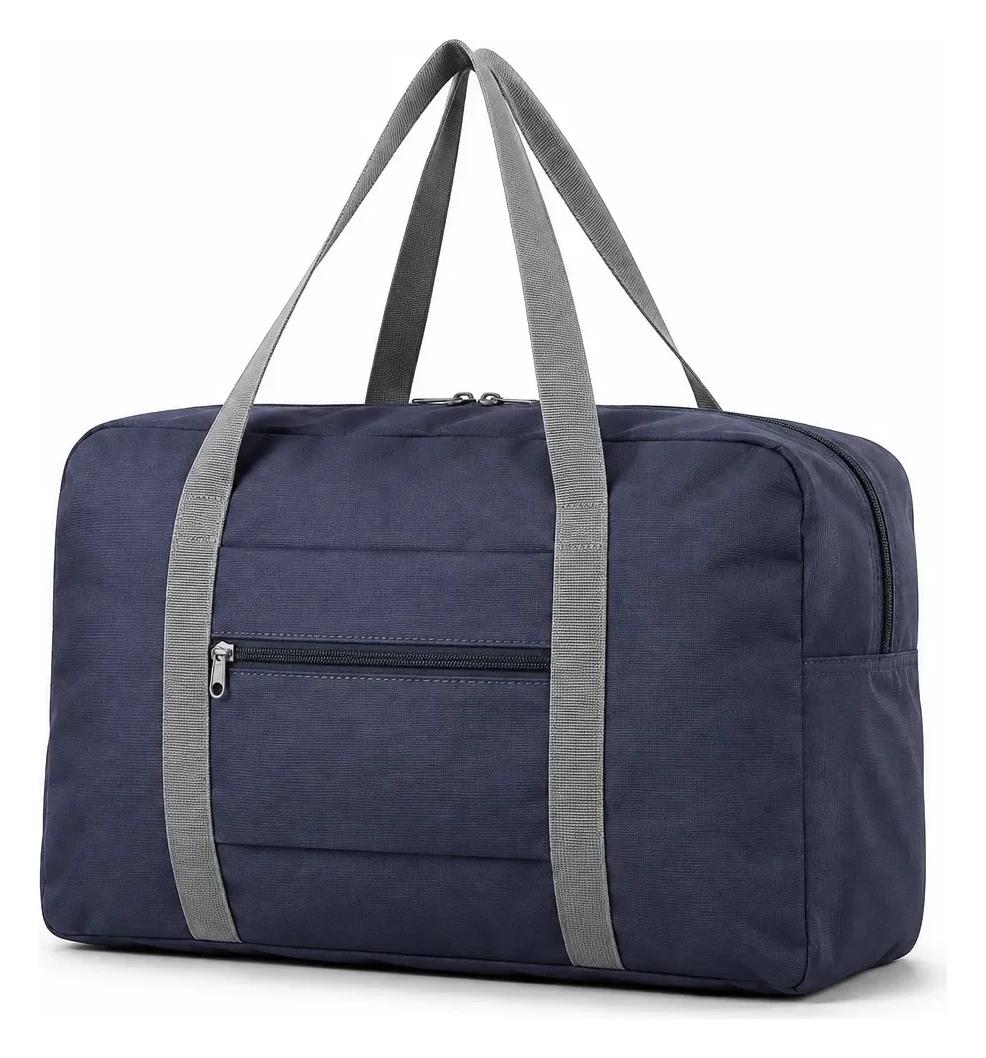
Items to Bring
- At least 5 pairs of khaki shorts or pants
- At least 3 athletic shirts (school appropriate: correct coverage and length, no inappropriate graphics or lettering)
- At least 8 pairs of underwear and socks
- Sleepwear
- 2 bathing suits or swim shorts
- Hat and sunglasses
- A waterproof, windproof jacket
- The school sweater
- Sandals or slides
- At least one pair of closed-toe work shoes
- Water shoes (optional)
- Headphones, and an MP3 player (optional)
- Paper books
- A small waterproof bag for days on land, packed inside the duffle
- A debit or credit card for spending money on land, for snacks or souvenirs
- Personal toiletries: toothbrush, toothpaste and deodorant (shampoo and body wash are provided)
- Prescriptions and over-the-counter medicines, in their original pharmacy containers, handed directly to an adult
17 Items
Items Not to Bring
- Cell phones or smartwatches: neither is allowed on the expedition
- Cash: spending money goes on a debit or credit card
- Knives, multitools or other sharp objects
- Hoodies or other sweaters: the school sweater is the only one allowed
- Portable speakers, radios or other shared music devices
- Bedding, towels, pillows, sheets or giant stuffed animals
- Fishing rods or tackle
- High heels, dress shoes or other formal wear
- Video game or handheld consoles
- Laptops, iPads, tablets, e-readers or other electronic devices
- Drugs, alcohol, vapes, nicotine or anything else that breaks the ship rules
- Expensive clothing, shoes, jewelry or anything of great monetary or sentimental value
- Snacks, food or drinks
13 Items
Provided Aboard
Items provided aboard, and the cost to replace each if lost or damaged Item If Lost Uniform Shirts (5) $15 each Water Bottle $10 Life Jacket $250 Snorkeling Gear $20 Personal Fan $30 Journal $10 Bedding and Pillow Provided Towels Provided Shampoo, Body Wash and General Toiletries Provided Sunscreen and Bug Spray Provided These items are provided for the expedition. Any item not returned, or returned lost or damaged, is billed to the family at the cost shown.
15 · Required Documents
Required Documents
Before Departure
7 requirements
| Document | What’s Needed | Form or Status |
|---|---|---|
| Expedition Application | What’s NeededChoose the term, answer five short reflection questions and upload a letter of recommendation. Applying does not guarantee a place. | Form or StatusApply Online |
| Passport | What’s NeededA U.S. passport book (or your student’s own country’s passport), valid for at least six months after the expedition ends. Send the school a copy of the photo page. | Form or StatusPassport Guide |
| Expedition Liability Waiver | What’s NeededSigned by a parent or guardian before the student can sail. | Form or StatusRequired |
| Medical Release & Medication Form | What’s NeededEvery medication, allergy and condition, and permission for the crew to give care. | Form or StatusRequired |
| Health Exam & Immunizations | What’s NeededThe school health exam and immunization records, on file from enrollment and up to date. | Form or StatusRequired |
| Emergency Contacts | What’s NeededPrimary and emergency contacts in registration, checked and current. | Form or StatusRequired |
| Mandatory In-Person Parent/Student Meeting | What’s NeededThe student and a parent or guardian attend an in-person meeting with the school before departure. The school shares the date. | Form or StatusRequired |
Next Steps
Apply, Then Get Ready
Applications are open for the Term 3 and Term 4 expeditions, with 5 spots in each. Apply by November 30 for Term 3, or by January 11 for Term 4.